
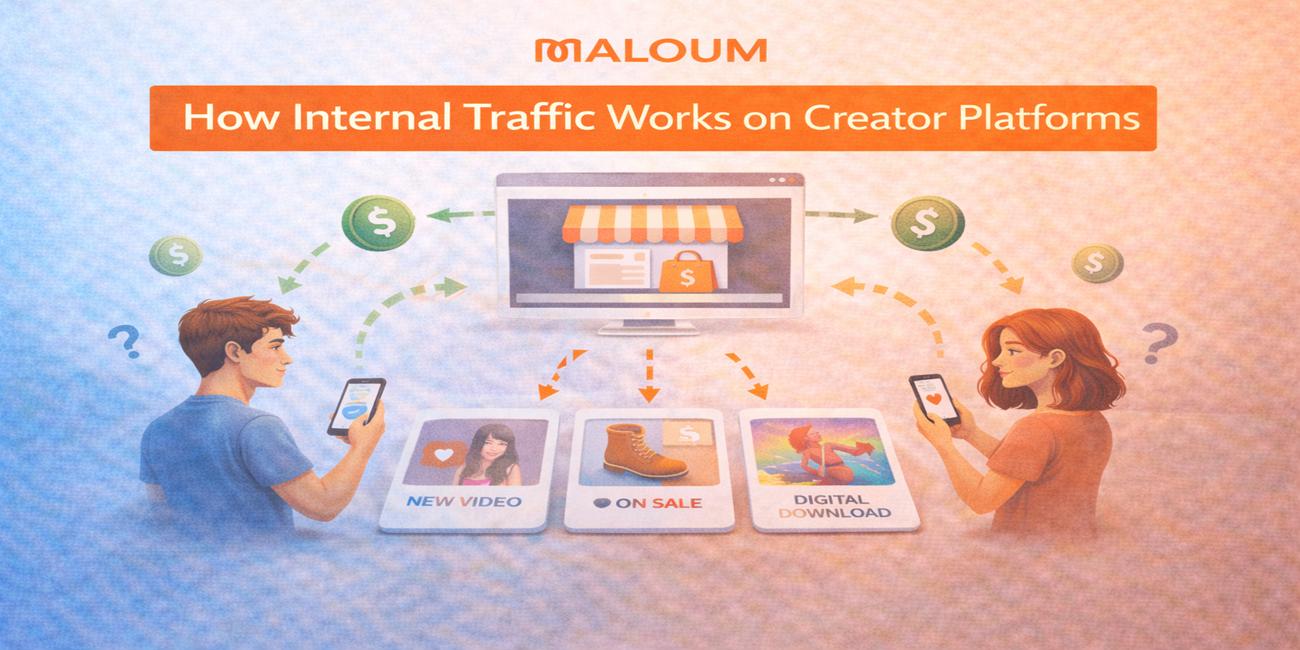
How Internal Traffic Works on Creator Platforms
Understanding how internal traffic works on creator platforms is essential for long-term stability. Internal traffic is the audience you don’t personally bring. It’s views and clicks that come from inside the platform through search, categories, recommendations, and suggested creators placements. It works differently than social traffic because it’s colder and comparison-driven. To benefit from this traffic, you need two things: visibility signals that earn exposure and a conversion structure that turns exposure into paid actions.
If you feel invisible inside a platform, it’s rarely random. Internal discovery usually follows predictable mechanics and understanding them is crucial for your business.
What counts as internal traffic
Internal traffic is any visit that comes from inside the platform instead of your external links on sites like Facebook, Instagram, or a YouTube sequence of videos.
Common internal sources include:
- Internal search results
- Category pages and tags
- Recommendation feeds
- Trending or popular surfaces
- Similar creators modules
- Curated platform features
Creators often assume internal discovery is a bonus feature that turns on by default. However, most platforms treat it like inventory. Just as Google uses algorithms to organize website traffic, creator platforms send internal discovery where it’s most likely to create positive outcomes: satisfied fans, completed payments, and repeat spend.
Why internal traffic converts differently than social traffic
Social visitors usually arrive with context. They’ve seen your quality content and already know your vibe, making them more willing to tolerate friction.
Internal visitors are just browsing to discover new content. They compare multiple creators quickly. Their mindset is closer to shopping than fandom, which completely changes user behavior:
- They need clarity fast
- They are price and risk sensitive
- They bounce quickly if the offering is vague
- They abandon easily if checkout occurs with too much friction
- They judge your activity and professionalism instantly
This shift alters the meaning of a page view. Internal traffic can scale, but it doesn’t reward mystery. It rewards a direct approach and confidence.
The internal discovery loop most creators don't realize they're in
If you check your data and monitor conversions, you gain insights into this loop. Most platforms follow this sequence:
- The platform tests your profile with a small amount of internal exposure
- It watches what users do next
- If outcomes are good, you get an increase in exposure
- If outcomes are weak, exposure shifts elsewhere
The outcomes platforms tend to care about include click-through rates, time spent on your profile, subscribe actions, renewal behavior, and checkout completion. This is why internal traffic can appear in spikes. You might get a short burst, then nothing. Often, that’s a test that didn’t convert strongly enough to keep compounding.
Visibility signals that influence internal traffic
Platforms don’t only rank creators by who posts the most. They rely on signals that help match creators to fans. These are the visibility signals that usually matter.
Category and search relevance
Think of this like SEO for creators. Just as developers optimize a website or blogs with keywords, tags, and articles to improve rankings, you need to optimize your profile. Internal search depends on relevance.
Relevance improves when:
- Your bio clearly describes what you offer
- Your niche is consistent instead of mixed
- Tags and categories align with what you actually post
- Your visuals match your positioning
Activity and freshness signals
Internal discovery favors creators who look active. You need consistent freshness, which shows up through a predictable posting cadence, recent content visible on your profile, and updated pinned posts. If you create content but your page still looks stale, your rankings drop.
Engagement signals that imply satisfaction
Platforms want to surface creators that keep fans satisfied. Engagement doesn’t only mean likes. It can include repeat interactions, returning visitors, and how quickly a creator answers messages.
Conversion performance
Conversion is the signal that turns internal exposure into more internal exposure. If people click your page and bounce, that’s a negative signal. If they subscribe, that’s a powerful signal. You need the ability to treat your profile like a storefront, applying best practices to secure that conversion.
How to convert internal traffic once it arrives
Internal traffic is a test. Your job is to pass it.
Make your offer obvious in 10 seconds
Your first lines should act as a clear guide. State what a subscriber gets, how often you post, and what the fan should do next. Vague language doesn't work in marketplace environments.
Reduce first-purchase risk with pricing structure
Internal visitors are cold and risk-sensitive. You don't need to underprice yourself, but you must ensure the first purchase feels safe. Keep entry pricing aligned with cold-browse intent and increase revenue per fan through PPV, bundles, and tips after they access your content.
Add trust cues without trying too hard
Trust cues are subtle but essential. Build trust through consistency in visuals, clear boundaries, and a structured start here pinned post, which acts a bit like internal linking on a blog to guide users to your best work.
Treat checkout friction as part of conversion
Many creators lose internal traffic value at the critical last step: payment. If checkout is limited or slow, internal discovery won’t translate into revenue. A high view count with low paid actions often means the price feels risky or checkout friction kills completion.
OnlyFans, Fansly, and MYM: internal traffic expectations vs reality
Creators often ask which platform has the most internal traffic. The better question is: which platform’s internal discovery model matches your strategies?
- OnlyFans: Many creators rely heavily on external funnels like referral traffic sources, guest posts, or backlinks to their link trees. Internal discovery can feel limited.
- Fansly: Internal browsing surfaces matter more depending on how the platform filters categories. Marketplace conversion skills are highly important here.
- MYM: Marketplace-style discovery introduces internal views but increases comparison behavior. Profile clarity has an outsized impact here.
How MALOUM fits into internal traffic and marketplace conversion
Internal traffic is valuable because it reduces reliance on external algorithms. But it only becomes meaningful if you have the right tools and your business isn’t trapped in one platform’s discovery model. This is where MALOUM fits as creator monetization infrastructure.
Marketplace discoverability creates a second discovery pathway Creators who rely entirely on social platforms are exposed to algorithm swings. MALOUM is positioned around marketplace discoverability, offering a way for fans to find you that doesn't require winning a social algorithm every week.
Flexible payment infrastructure protects the purchase moment If a fan reaches checkout and payment fails, they simply keep browsing. MALOUM emphasizes flexible payment infrastructure to reduce friction. More payment accessibility means more completed subscriptions when internal traffic arrives.
Revenue diversification reduces dependency Relying exclusively on one platform is a concentration risk. As emerging trends shape the future of the industry, adding MALOUM as an additional monetization layer supports revenue diversification. You keep what works while building redundancy.
Practical creator scenarios
A creator looks at their website analytics and sees internal profile views but low subscriptions. They adjust their first lines for clarity, simplify the offer, and add a pinned post. Conversion improves, and internal exposure becomes more consistent.
A creator gets internal traffic spikes that don't repeat. They focus on first-purchase risk, clear messaging, and a predictable cadence. Bounce rate drops, and internal discovery starts compounding.
A creator relies on one social channel. When reach dips, income dips. They build a second discovery pathway and add an additional monetization layer so their business doesn't depend on one algorithm.
FAQ
What is internal traffic on creator platforms?
Internal traffic is discovery that happens inside a platform, including search results, categories, and recommendation feeds. Visitors compare quickly and decide based on clarity and checkout confidence.
Why do I get internal traffic sometimes, then none?
Platforms test creators with small bursts of internal exposure. If the traffic doesn't convert well, the platform reduces future exposure.
How do I monitor this like I would with Google Analytics?
While you don't have access to traditional Google Analytics on most creator platforms to view a detailed table of traffic sources, you can use the platform's native analytics to track profile clicks versus subscribe actions to measure your internal conversion rate.
Does internal traffic convert better than social traffic?
Not usually. Internal traffic is often colder, so conversion can be lower than warm social traffic. The advantage is volume and stability.
What role does checkout friction play?
A leading one. If payment fails or feels inconvenient, impatient visitors rarely retry. Checkout friction reduces completed purchases and weakens the performance signals that drive future internal exposure.
Would you like me to help you draft a highly optimized, 10-second "Start Here" bio to help you capture and convert more of this internal traffic?

MALOUM, gemacht für Creator und Fans. Werde jetzt Teil von MALOUM.
