
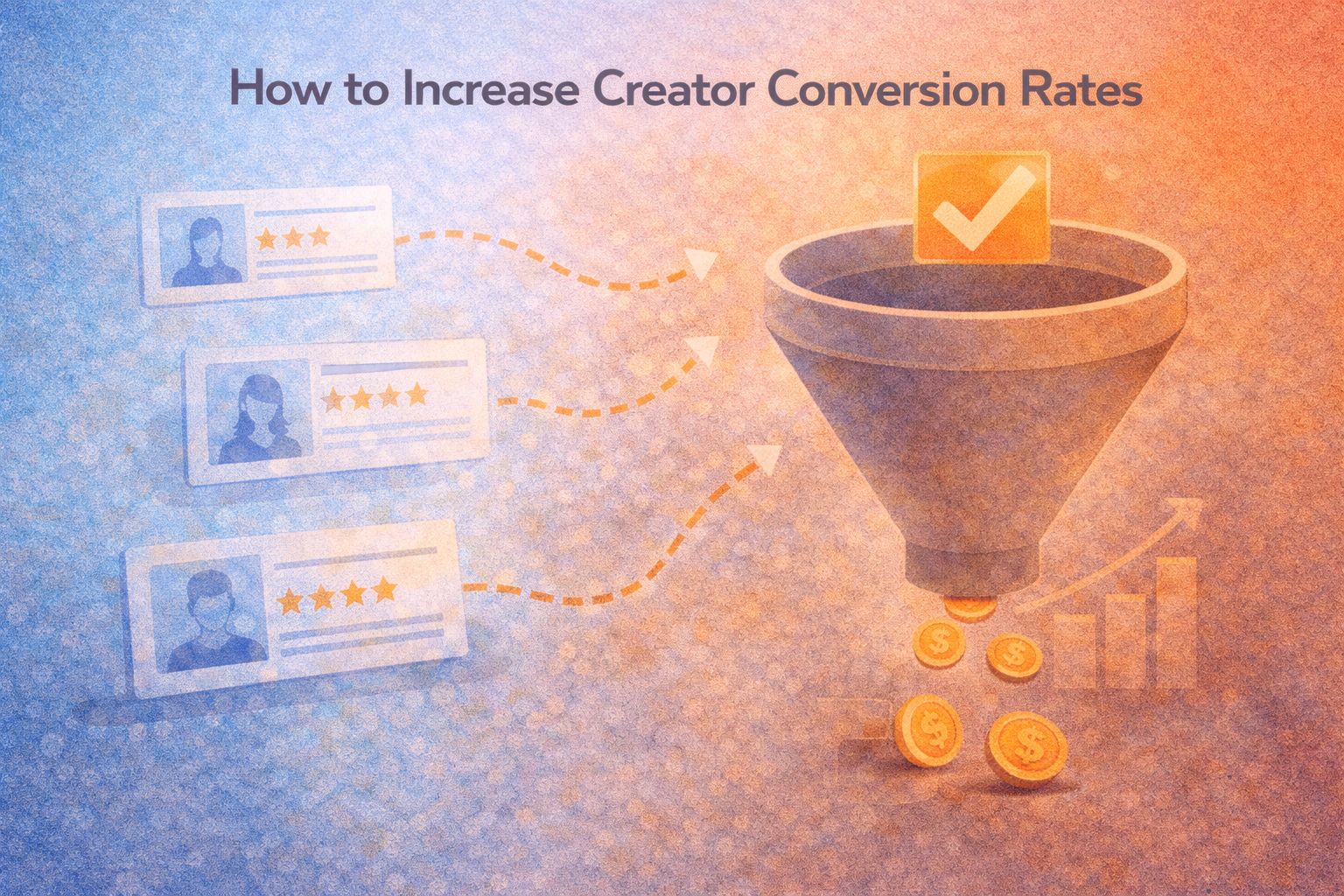
How to Increase Creator Conversion Rates
Increasing creator conversion rates means turning more profile visitors into paying subscribers. Most conversion problems are not caused by a lack of traffic but by friction in the decision or payment process. Clear positioning, accessible pricing, and reliable payment infrastructure all play a role in improving how many visitors become fans.
Creators who focus on conversion mechanics often see their business revenue improve without increasing their audience size. For any content creator, shifting your business model to reduce friction makes a significant difference.
Why Marketplace Traffic Does Not Always Convert
Creators often assume that more views will automatically lead to more subscribers. Marketplace platforms rarely work that way.
When fans discover a creator through internal search or recommendation systems, no matter their location in the world, they are often comparing multiple profiles at once. This means the decision to subscribe happens quickly.
A fan visiting an account usually evaluates several signals within seconds:
- What type of content is offered in the feed.
- How active the person appears in their posts.
- Whether the subscription price feels reasonable.
- Whether the profile looks professional, trustworthy, and fits their niche.
If these signals are unclear, visitors often move to another profile instead of choosing to complete a subscription. Marketplace traffic behaves differently from social media traffic. Social followers already know the creator, while marketplace audiences are evaluating options. Improving conversions requires making that evaluation easier and more compelling.
The Real Reasons Creator Conversion Rates Stay Low
Several structural issues commonly reduce subscription conversion.
One of the most common problems is unclear profile positioning. If visitors cannot quickly understand what they receive when subscribing, they hesitate. Pricing perception also affects conversion. If the price feels disconnected from the perceived value of the content, visitors delay subscribing even if they are interested.
Technical and UX Friction If your funnel is broken, everything else goes wrong. Think about the importance of a smooth user experience. For example, if you use video teasers on a platform like YouTube, you want the viewer to transition to your page smoothly.
Imagine a potential customer trying to sign in to YouTube on their mobile device or YouTube on your computer and they are hit with glitches—like an alert that an error occurred while retrieving the stream, or a message saying playback doesn't begin shortly try restarting your device. Sometimes glitches say an error occurred while retrieving sharing info, or if the video doesn't begin shortly try restarting.
Even platform warnings cause friction. If a user sees a prompt warning that videos you watch may be added to the tv's watch history or watch may be added to your history and influence tv recommendations, they might panic about their privacy. To avoid this cancel process, or to prevent their viewing habits from bleeding into their tv's watch history and influence tv recommendations, they simply hit back. If they have to tap to unmute, click show transcript, or struggle to watch full video previews, they will abandon the funnel immediately.
Checkout Friction Payment friction is a massive factor. A fan might want to purchase, but if they can't use their preferred payment method (like Google Pay), or if they are forced to enter excessive payment details that make them question the site's security, they won't pay. Card declines, payment restrictions, and a lack of tools to process modern payments prevent fans from checking out.
How Experienced Creators Improve Conversion
Creators who consistently convert marketplace traffic tend to focus on clarity and accessibility. What worked years ago, or even months ago, might not work today. Analytics from just 1 year ago, 1 month ago, or even 1 day ago prove that buyer habits shift rapidly.
The first improvement often involves profile messaging. A strong profile communicates clearly what fans receive. This includes posting frequency, content style, and subscriber benefits.
Pricing strategy also plays a role. Many successful creators structure pricing so that the first purchase feels low risk. Once a fan subscribes, additional revenue layers such as pay-per-view content or tips can increase lifetime value.
Another important improvement is reducing checkout friction. Fans are more likely to buy when payment options are familiar. If checkout fails once, many users do not retry.
The Role of Platform Infrastructure in Conversion
Conversion does not depend only on creator behavior. Platform infrastructure plays a major role. OnlyFans, for example, relies heavily on external traffic from social platforms. Discovery inside the platform is limited, meaning creators depend on external collaborations, brands, or viral hits to bring fans to their profile.
When discovery depends mostly on external traffic, creators often focus on audience growth rather than conversion efficiency. However, conversion is strongly influenced by:
- Payment flexibility
- Checkout reliability
- Marketplace discovery systems
- Internal traffic distribution
When you respect the buyer's time and these elements work well together, visitors are more likely to convert.
How MALOUM Supports Higher Creator Conversion
MALOUM approaches creator monetization from an infrastructure perspective. The platform focuses on systems that improve how traffic converts into revenue.
One element is marketplace discoverability. When platforms provide structured internal discovery, creators can receive traffic directly from the marketplace rather than depending entirely on social media.
Payment flexibility also influences conversion rates. MALOUM supports broader payment infrastructure, expanding the ability to use flexible payment methods. When fans encounter fewer barriers, subscription completion rates improve.
MALOUM can function as an additional monetization layer. Creators who diversify their revenue infrastructure reduce reliance on a single platform while increasing the number of ways fans can subscribe and pay.
Practical Creator Scenarios
Let's look at a few scenarios, breaking them down along using the transcript of standard creator experiences:
- Scenario 1: A creator may receive strong marketplace visibility but see low numbers. After using creative insights to update their profile messaging, conversion improves without increasing traffic.
- Scenario 2: A creator notices fans frequently attempt to subscribe but payments fail. By operating on a platform with broader payment flexibility, more transactions succeed and the delivery of content becomes a stable business.
- Scenario 3: A creator relies heavily on social media. By adding a marketplace-driven platform, the client gains an additional traffic source and reduces dependency on algorithms.
Frequently Asked Questions
What does creator conversion rate mean? It refers to the percentage of visitors who become paying subscribers. If a profile receives 1,000 visitors and 50 subscribe, the conversion rate is 5%.
Why do creators get traffic but no subscribers? This usually happens when visitors encounter friction. Unclear profile messaging, pricing hesitation, or technical barriers can prevent fans from subscribing.
Does pricing affect creator conversion rates? Yes. Pricing influences how quickly a visitor decides to subscribe. Many creators use tricks like lowering entry pricing and generating additional revenue through upsells.
Can payment methods affect conversion rates? Absolutely. If fans cannot pay using familiar methods, transactions fail. You must fix this by offering flexible checkouts.
Is traffic or conversion more important for creator growth? Both matter, but conversion improvements generate faster revenue growth. If conversion rates increase, every visitor becomes more valuable.
Final Thoughts
To create real income, you need to look past simple visibility. You must sign up for platforms that shop your profile internally, break down the barriers to entry, and offer seamless payments.
Creators who focus on conversion mechanics and diversify their monetization infrastructure build more stable and scalable income over time.

MALOUM, gemacht für Creator und Fans. Werde jetzt Teil von MALOUM.
